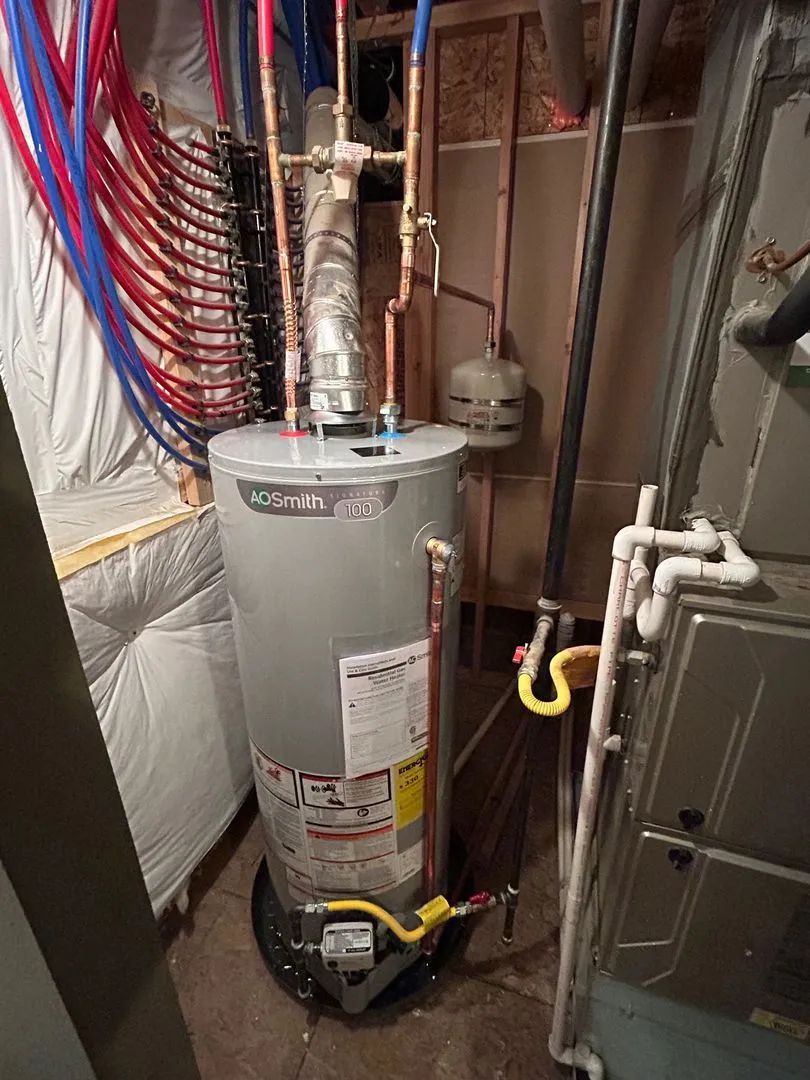
Water Heater Failing? The Warning Signs to Catch Before It Quits
September 30, 2026
QUICK ANSWER: A water heater on its way out usually gives warning before it quits outright. The clearest signs are rust colored water that does not clear, rumbling or popping during the heat cycle, moisture or pooling around the base of the tank, a temperature and pressure relief valve that drips or discharges, and a sulfur or metallic smell from the hot tap. Age matters too, since most storage tanks are built to last 8 to 12 years and repairs on a unit past that range tend to cost more than they save. Any sign involving standing water or a discharging relief valve calls for a same day look, while a single rumble or a faint smell can usually wait for a scheduled visit.
The rust shows up first in the laundry, a faint orange tint on a load of whites that used to come out clean. Then it is a puddle at the base of the tank that was not there last week, dried into a ring by the time anyone notices. A water heater rarely fails without warning. It sends a string of small signals for weeks or months before it actually stops working, and most homeowners only connect them after the fact, once the tank is already leaking or the shower has gone cold for good.
Catching those signals early is what turns a planned replacement into a routine errand instead of an emergency call on a Saturday night. Below are the signs that actually mean something, what each one is telling you about the inside of the tank, and which ones mean the situation cannot wait.
What "About to Fail" Actually Means for a Tank
A storage water heater is a sealed steel tank, glass lined on the inside, holding forty to fifty gallons of water under pressure and reheating it continuously for years without much attention. That lining is what keeps the steel from corroding on contact with water, and a sacrificial anode rod inside the tank takes the corrosion instead of the tank walls, dissolving slowly over the years it is in service. Failure, when it happens, is rarely a single dramatic event. It is the lining wearing through, the anode rod finally spent, sediment packing the bottom of the tank, or a fitting that has corroded past the point of holding a tight seal. Each of those has its own outward sign, which is why a tank rarely goes from fine to finished with no warning at all.
The Signs That Point to a Tank Nearing the End
Age Past The Typical Range
Most gas and electric tank water heaters last about 8 to 12 years. Hard water and poor maintenance can shorten that span, so older units deserve closer attention even without obvious problems.
Rust Colored Water That Does Not Clear
Brief discoloration after plumbing work usually clears quickly. Persistent rust-colored hot water, especially when cold water remains clear, can indicate corrosion inside the tank as its protective lining deteriorates.
Rumbling, Popping, Or Knocking During The Heat Cycle
Rumbling or popping usually indicates sediment buildup on the tank floor. As minerals accumulate, trapped water overheats beneath the hardened layer, reducing efficiency and increasing stress on the burner, element, and tank.
Moisture Or Pooling Anywhere Around The Base
Condensation can be normal, but recurring standing water or a crusty ring around the tank base is not. It may indicate a loose fitting, failing drain valve, or crack developing within the tank itself.
A Temperature And Pressure Relief Valve That Drips Or Discharges
A properly functioning temperature and pressure relief valve should remain dry between tests. Continuous dripping can indicate valve failure, while an actual discharge of hot water may signal dangerous overheating or excessive pressure requiring prompt attention.
A Sulfur Or Metallic Smell From The Hot Tap Only
A rotten-egg odor from hot water often results from the anode rod reacting with bacteria inside the tank. A metallic smell can instead indicate corrosion products loosening from an aging tank.
Inconsistent Temperature That Used To Be Steady
A heater that once maintained consistent temperatures but now swings between hot and lukewarm may have a failing element, thermostat, or burner, sometimes indicating broader aging rather than an isolated component problem.
How Commerce City and Denver Metro Conditions Speed This Up
Denver Water classifies its overall supply as soft to moderately hard, with the southern collection system running moderately hard and the northern system somewhat softer, and hardness also climbs slightly in winter as frozen waterways allow more mineral pickup. In any home on the harder end of that range, minerals drop out of the water and settle into the tank faster, which means sediment reaches the point of rumbling and slowed recovery years sooner than it would on consistently soft water. A tank that has never been flushed in Commerce City or the surrounding Adams County communities is a strong candidate for an early sediment problem.
Cold incoming water adds a second factor. Colorado groundwater runs cold to begin with and colder still during a winter cold snap, so the heater works harder and longer to bring each new batch up to temperature. A tank that is already marginal, whether from age, sediment, or a struggling element, tends to show its weakest performance in the depths of winter, which is exactly when a hot shower matters most.
TIP: Flush the tank once a year if the water in your area runs on the harder side, and check the temperature and pressure relief valve at the same time by lifting its test lever briefly and confirming water flows freely, then stops. Catching sediment and a sticking valve early is one of the few maintenance steps that meaningfully slows how fast a tank reaches the signs above.
Which Signs Mean Call Now, Which Can Wait
Not every sign carries the same urgency, and sorting them correctly avoids both unnecessary panic and an emergency that gets ignored too long.
Call the same day for: any standing water around the base of the tank, a relief valve that is actively discharging, or a smell strong enough to notice from another room. These point to a tank that is leaking under pressure or running dangerously hot, and waiting risks water damage or a genuine safety issue rather than an inconvenience.
Schedule a visit soon for: rust colored water that keeps returning, rumbling that has grown noticeably louder over recent months, or temperature that has started swinging. These are real signs of decline, but they typically develop over weeks, which leaves room to schedule an inspection rather than treating it as an emergency.
Keep watching for:
a tank that has simply crossed into its typical age range with no other symptoms yet. Age alone is not an emergency, but it is a reason to have the anode rod and tank condition checked rather than waiting for a more urgent sign to appear.
What Happens If a Failing Tank Is Ignored
The signs above exist because the alternative to noticing them is a tank that fails on its own terms rather than yours. A slow leak that goes unnoticed behind a water heater in a closet or utility room can run for days before it is caught, soaking flooring and drywall long before anyone smells or sees it. A relief valve that has been leaking and gets ignored can eventually seize, removing the one safety device built to release pressure if the tank ever does overheat. And a tank running on borrowed time tends to fail at the worst possible moment, since demand and cold incoming water both peak on the coldest mornings of the year, exactly when a struggling tank is least able to keep up.
WARNING: A temperature and pressure relief valve that actually discharges hot water, rather than just weeping a small amount, means pressure or temperature inside the tank has climbed to an unsafe level. Superheated water released to open air can flash into steam almost instantly. Shut off the water heater and its water supply and call a plumber promptly rather than resetting the valve and hoping it holds.
What a Proper Inspection Actually Checks
A visual check of the outside of a tank only tells part of the story, since rust at a fitting can look identical whether the tank has years left or days. A thorough look checks the anode rod for how much material remains, tests the relief valve under real conditions rather than just a glance, drains a sample to judge how much sediment has accumulated, and reviews the age and condition of the tank against how it has been performing. That combination is what turns a guess into an answer about whether the household is looking at a simple service, like a flush or a new anode rod, or a tank that has genuinely reached the end of what it can safely do.
JAC's Plumbing
has spent more than two decades diagnosing exactly these calls across Commerce City and the greater Denver metro, checking the parts that actually determine a tank's remaining life rather than assuming the worst or waiting until a leak forces the issue. Correcting venting, permitting, and installation shortcuts left behind by a previous job is also part of getting a replacement done right the first time, when a tank has reached that point.
Frequently Asked Questions
How many years does a typical water heater actually last?
Conventional gas and electric tanks last 8 to 12 years, though harder water and infrequent flushing shortens this span. Tankless units last 20 years or longer since they avoid sediment buildup from storing standing water.
Is rust colored hot water always a sign the tank is failing?
Rust colored water right after plumbing work typically clears within minutes and is completely normal. Persistent rust coloring appearing on the hot tap while cold runs clear signals internal tank corrosion and likely tank decline.
Can a rumbling water heater be fixed instead of replaced?
Sediment rumbling caught early can usually be fixed by thoroughly flushing out the tank. Prolonged rumbling or rumbling present in older tanks signals hardened sediment requiring full tank replacement rather than routine flushing repair alone.
What should I do if the relief valve on my water heater is leaking?
A continuously weeping relief valve has likely failed and needs replacement, though the tank itself may be perfectly fine. A valve actively discharging hot water signals dangerous over pressure or overheating requiring immediate professional inspection.
Does hard water in the Denver area shorten a water heater's life?
Hard water shortens tank life in Denver, particularly on the harder end of the local water supply. Homes build sediment faster, accelerating decline signs. Regular tank flushing is the primary way to offset this effect.
Is it worth repairing a water heater that shows one of these signs, or should I plan to replace it?
Younger tanks with isolated issues like stuck relief valves or sediment buildup are often worth repairing. Tanks past typical age showing rust water, rumbling, or base moisture are nearing end of life and warrant inspection.
The Tank Gives Warning Before It Fails
Every sign a tank shows is information about what is happening inside. Some problems demand same day attention. Others warrant scheduling an appointment rather than rushing into an emergency. The difference is clear once you know what to listen for. Rust colored water and rumbling tell you internal parts have declined. A pool of water or discharging valve tells you a leak is happening or about to start. Knowing which sign falls into which category means responding appropriately rather than overreacting to rumbles or ignoring standing water.
JAC's Plumbing
has spent 23
years diagnosing
water heaters
across Commerce City, CO, showing exactly these signs. Every declining tank, whether from age, sediment, or corroded fittings, follows a pattern. The tank gives warning first. The warning gets ignored or misunderstood. The tank then fails on its terms, usually at the worst possible time. Catching early signals and responding the way the tank is telling you to is the only way to stay ahead of a failure that costs far more as an emergency than a scheduled repair.